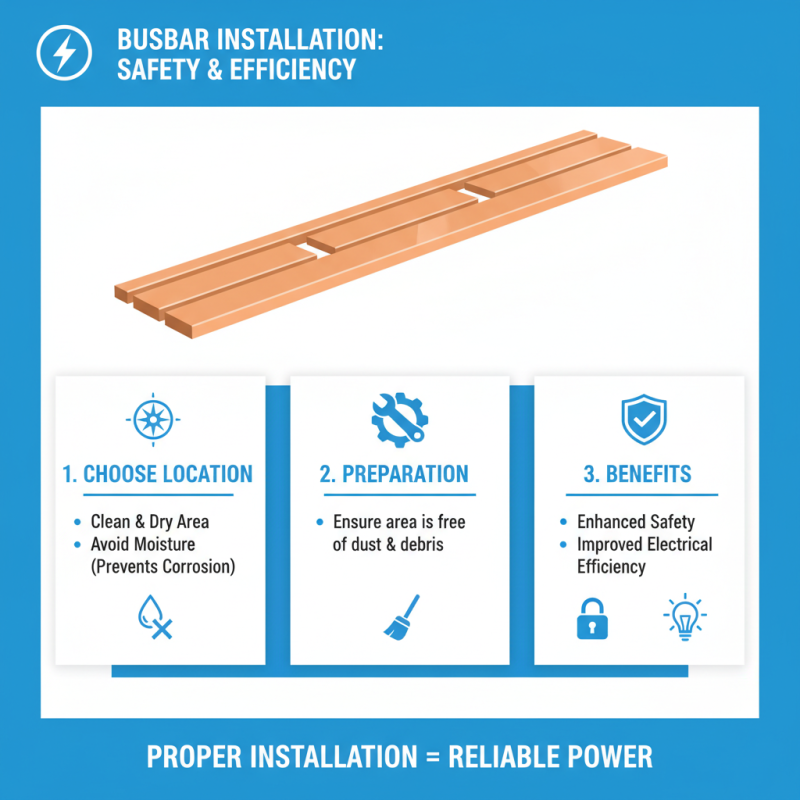
Essential Tips for Understanding Busbar Electrical Basics?
Understanding the fundamentals of Busbar Electrical systems is vital in today's energy infrastructure. According to Dr. Emily Grant, a leading expert in electrical engineering, "Busbars are the backbone of modern electrical distribution." This statement emphasizes the critical role busbars play in ensuring efficient power flow.
Busbar Electrical systems connect various components, forming a unified network. These conductors are generally made from copper or aluminum. They offer low resistance paths to transmit electrical power. However, understanding their design and implementation can be challenging. Common mistakes include underestimating thermal expansion and not adhering to safety standards.
Dr. Grant also highlights, "Many overlook the importance of proper insulation and mounting." These details can prevent overheating and system failures. Yet, despite their significance, many still face difficulties with installation and maintenance. Acknowledging these issues is crucial for improving proficiency in Busbar Electrical systems.
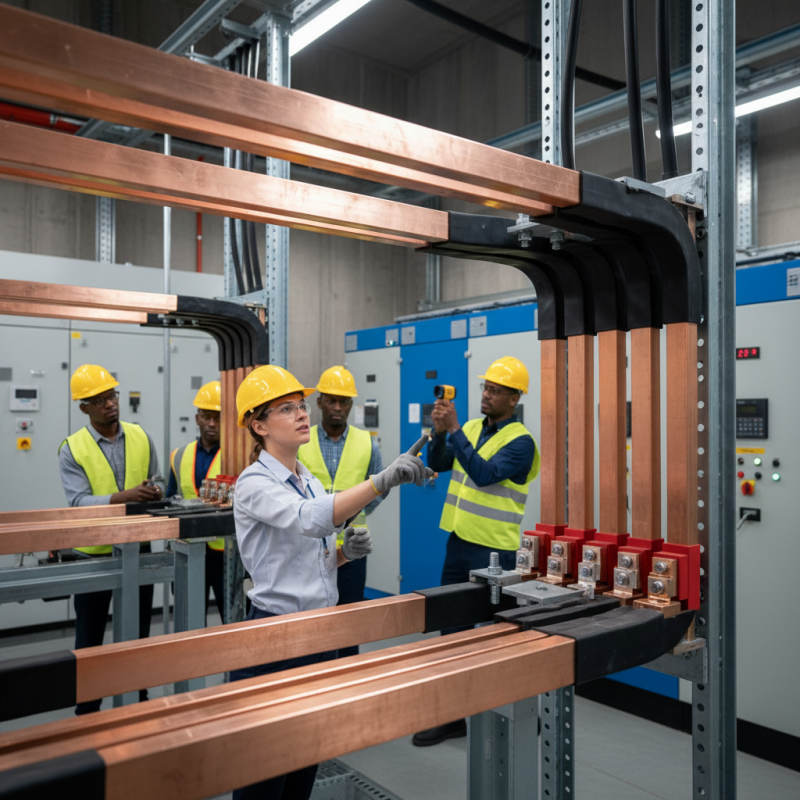
Understanding the Concept of Busbars in Electrical Systems
Busbars play a crucial role in electrical systems. They are metal strips or bars that conduct electricity. Busbars connect various components, like circuit breakers and transformers. Their primary function is to distribute electrical power efficiently. Without them, systems would face higher resistance and voltage drops.
Understanding the design of busbars is essential. They come in various sizes and materials, typically copper or aluminum. The thickness affects the current-carrying capacity. Proper insulation is also crucial. Some people overlook the importance of heat dissipation. If not managed well, overheating can damage the system.
Maintenance is often neglected. Regular inspections can prevent failures. It’s easy to ignore wear and tear over time. Corrosion can weaken busbars, leading to safety risks. Consider the environment where busbars operate. Humidity and temperature fluctuations can affect performance. Awareness of these factors is vital for longevity and safety.
Types of Busbars and Their Applications in Power Distribution
Busbars are crucial in power distribution. They act as conductive pathways. These metal bars can manage high current loads. Understanding different types of busbars is essential for effective design.
There are several types of busbars. Aluminum and copper are common materials used. Aluminum busbars are lighter but less conductive. Copper, on the other hand, offers better conductivity. They find applications across various sectors. For large power plants, copper busbars are often a priority. In contrast, aluminum is suitable for smaller installations.
Incorrect sizing or material choice can lead to issues. Overheating may occur if not properly designed. Frequent checks are necessary to maintain safety. Proper installation and routine maintenance are key. Ignoring these can lead to significant failures. Each application requires careful consideration of specifications.
Essential Tips for Understanding Busbar Electrical Basics
This bar chart illustrates the different types of busbars used in power distribution and their applications. The data represents the estimated usage percentage of each busbar type in various industries.
Key Electrical Properties of Busbars: Conductivity and Resistance
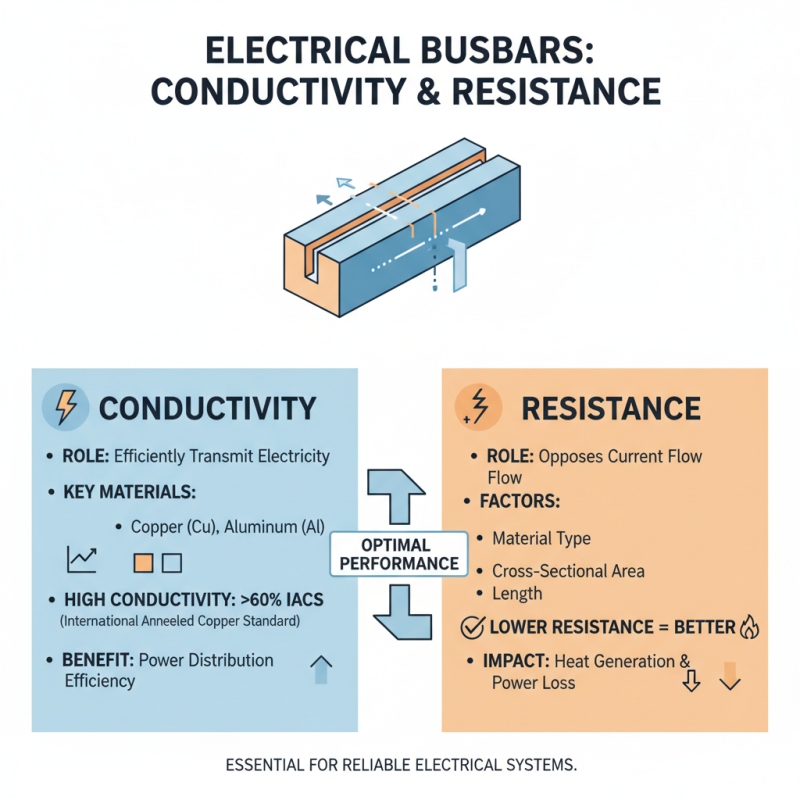
Busbars are critical components in electrical systems, serving as conductors that distribute electricity. Understanding their electrical properties, particularly conductivity and resistance, is essential for effective installation and maintenance. Conductivity refers to a busbar's ability to transmit electric current efficiently. Materials like copper and aluminum are commonly used due to their high conductivity values, often exceeding 60% IACS (International Annealed Copper Standard).
Resistance, on the other hand, is the opposition to current flow. It's vital to minimize resistance to avoid energy loss in the system. According to a report by the National Electrical Manufacturers Association, optimizing resistance can improve system efficiency by up to 25%. Poor connections or insufficient busbar sizing can increase resistance, leading to overheating and potential failures.
Tip: Always assess the environment where the busbars will be installed. Factors like temperature and humidity can impact their performance. Choosing the right material based on environmental conditions will enhance conductivity and reduce resistance.
Another important consideration is busbar design. A well-designed busbar will reduce electrical losses. Monitor joint connections regularly. Faulty joints can significantly raise resistance, risking system integrity and safety. Incorporate thermal imaging techniques to identify hot spots in connections, revealing hidden resistance issues.
Common Issues and Troubleshooting Tips for Busbar Installations
Busbars play a crucial role in electrical systems. However, improper installation can lead to various issues. One common problem is overheating. When a busbar is not properly sized, it may carry excessive current. This causes a rise in temperature, risking damage to the insulation. Regularly checking temperature levels can help identify potential overheating.
Poor connections can also create significant challenges. Loose connections lead to arcing. This can cause equipment failure and safety hazards. Ensure that all connections are tight and secure. Regular inspections can help detect these issues early. Don't overlook signs like discoloration or unusual smells.
Inadequate ventilation is another concern. A busbar in a confined space may not disperse heat effectively. Consider the environment where it’s installed. Adding ventilation or cooling solutions can prevent overheating. Monitor the area around the busbars for dust buildup. Dust can insulate heat and exacerbate the problem. Make adjustments as necessary to ensure optimal performance.
Essential Tips for Understanding Busbar Electrical Basics
| Parameter |
Description |
Common Issues |
Troubleshooting Tips |
| Current Rating |
The maximum current a busbar can carry without overheating. |
Overheating issues leading to conductor failure. |
Ensure adequate spacing and cooling, and monitor current load. |
| Micro-pitting |
Surface wear due to electrical arcing at contact points. |
Increased resistance and heat generation. |
Regular inspection of contacts and maintaining proper torque settings. |
| Material Type |
Common materials include copper and aluminum with varying conductivity. |
Corrosion over time, particularly in moist environments. |
Use protective coatings and ensure proper environmental controls. |
| Connection Points |
Points where busbars connect to equipment or other bars. |
Loose connections can cause arcing and inconsistent power delivery. |
Regular tightening and use of anti-vibration mounts. |
| Installation Environment |
The physical and environmental conditions where busbars are installed. |
Dust and contaminants affecting performance. |
Install in clean, dry areas and use enclosures when necessary. |