How to Choose the Best Rising Busbar for Your Project?
In today's electrical engineering landscape, choosing the best Rising Busbar for a project is crucial. The global Rising Busbar market is projected to reach $3 billion by 2025, reflecting its increasing significance in power distribution systems. According to industry expert Dr. Lisa Chang, "Selecting the right Rising Busbar can significantly enhance efficiency and safety in modern installations."
Rising Busbars are essential for managing electrical loads in commercial buildings and industrial sites. A well-designed busbar system reduces energy losses and minimizes environmental impact. However, many projects struggle with selecting appropriate materials or sizes. This can lead to inefficiencies and increased costs.
Considering the complexity, designers must evaluate several factors. These include voltage ratings, thermal management, and mechanical strength. Yet, the decision process is often overlooked in many designs. A careful assessment will not only meet current demands but also anticipate future needs. Ultimately, the selection of a Rising Busbar deserves thoughtful attention.
Understanding the Basics of Rising Busbars and Their Applications
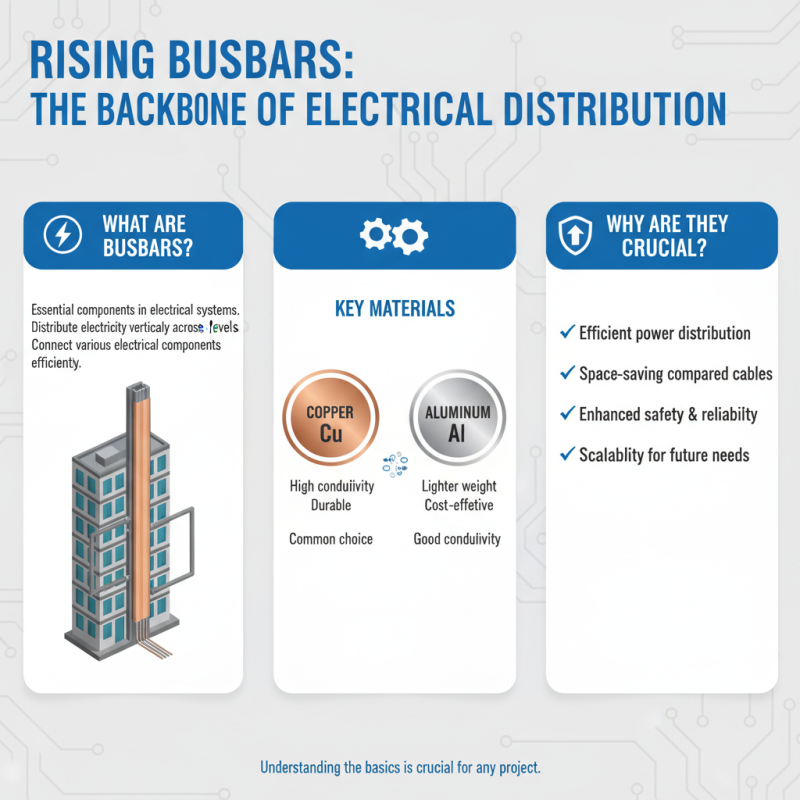
Rising busbars are essential in electrical systems. They distribute electricity efficiently and connect various components. Understanding their basics is crucial for any project. Common materials include copper and aluminum. These metals are chosen for their conductivity and durability.
A recent industry report highlights that copper busbars typically have a conductivity of 100% IACS, while aluminum offers about 61% IACS. This difference affects performance and cost. Projects requiring high efficiency often opt for copper. However, aluminum's lightweight nature can be beneficial in certain applications.
The installation process can be complex, requiring precise measurements. Mistakes during installation can lead to overheating and safety issues. Some engineers overlook the importance of proper grounding and support. These factors can compromise the system's integrity. It’s vital to regularly assess and review installations to prevent failures.
Key Factors to Consider When Selecting a Rising Busbar
When selecting a rising busbar, it's crucial to consider the current rating. This rating indicates how much electricity can safely pass through. Too low a rating can lead to overheating. Too high may mean overspending. A clear understanding of your project's power needs is essential. Assess your requirements accurately.
Another factor to look at is the busbar's material. Copper and aluminum are common choices. Copper is more conductive, but also heavier and more expensive. Aluminum, on the other hand, is lighter and more cost-effective but less conductive. Choose wisely based on your project needs and budget constraints.
Space constraints are also vital. Ensure you have enough room for installation. A busbar that’s too big can complicate the setup. Balance efficiency and practicality. As projects evolve, remember to reevaluate your choices. What seemed perfect at the start might not fit later adjustments or expansions. Adaptability is key.
Different Types of Rising Busbars and Their Benefits
Rising busbars are essential in modern electrical distribution systems. Understanding the different types available can greatly impact project success. The main types include air-insulated, gas-insulated, and compact busbars. Each type has unique advantages worth exploring.
Air-insulated busbars are commonly used due to their simplicity. They offer good cooling and are often cost-effective. According to industry reports, they can reduce installation costs by 10-15% compared to other systems. However, they may require more space and less flexibility in design. On the other hand, gas-insulated busbars provide a compact solution. They are enclosed in a metal container filled with a gas that enhances insulation. This design allows for smaller installations and improved safety. Yet, the initial investment can be higher.
Compact busbars are rising in popularity. Their modular design allows for quick assembly and customization. A recent study indicated that these systems can save up to 20% on maintenance. However, they may not handle extremely high loads as effectively as their counterparts. Each type presents advantages and potential drawbacks. Projects must weigh these factors carefully to ensure long-term reliability and efficiency.
How to Choose the Best Rising Busbar for Your Project? - Different Types of Rising Busbars and Their Benefits
| Type of Rising Busbar |
Material |
Current Rating (A) |
Temperature Rating (°C) |
Benefits |
| Copper Busbar |
Copper |
1000 A |
90°C |
High conductivity, Excellent heat dissipation |
| Aluminum Busbar |
Aluminum |
800 A |
70°C |
Lightweight, Corrosion resistant |
| Stainless Steel Busbar |
Stainless Steel |
600 A |
80°C |
High strength, Excellent corrosion resistance |
| Flexible Busbar |
Copper/Aluminum Combination |
500 A |
90°C |
Versatile, Easy to install in tight spaces |
| Insulated Busbar |
Copper/Aluminum with insulating coating |
750 A |
100°C |
Increased safety, Prevents short circuits |
Evaluating Electrical Ratings and Material Compatibility
When selecting a rising busbar for your project, evaluating electrical ratings and material compatibility is crucial. The electrical ratings often define the operational limits. These limits include voltage, current, and frequency. Consider the maximum load your system will encounter. Are you preparing for peak demand?
Material compatibility plays a significant role too. Various materials exhibit different electrical and thermal properties. Copper is highly conductive but is prone to oxidation. Aluminum is lighter and resistant but may require larger sizes. Think about the environment where the busbar will be installed. Will it be exposed to moisture or chemicals?
Ignoring these factors can lead to unexpected failures. It's essential to match materials to your project conditions. Check for specifications that meet your project's needs. Conduct extensive research and don’t hesitate to consult experts. Be prepared for complexities that could arise during installation and operation.
Installation and Maintenance Tips for Optimal Performance
When installing a rising busbar, proper attention to detail is crucial. Ensure all connections are tight and secure. Loose connections can lead to overheating and failures. Use appropriate torque levels when tightening bolts. Too much force can strip threads, while too little may cause issues. Check insulation levels during installation. Damaged insulation can result in shorts or energy loss.
Regular maintenance is also essential for optimal performance. Schedule periodic inspections to identify wear and tear early. Look for signs of corrosion or discoloration. These can indicate electrical faults. Clean the busbar regularly to remove dust and debris. Accumulated dirt can impact efficiency and increase resistance. Always keep a record of maintenance activities. This can help track performance over time.
Remember, even with the best practices, issues can arise unexpectedly. Have a plan in place for troubleshooting. Be prepared for potential downtime and its costs. Strive for improvement in every project. There is always room to enhance performance and efficiency in your electrical systems.