How to Choose the Right Lighting Busbar for Your Needs?
Choosing the right Lighting Busbar is crucial for various applications. This system provides efficient power distribution in commercial and residential spaces. However, selecting the best option can be challenging.
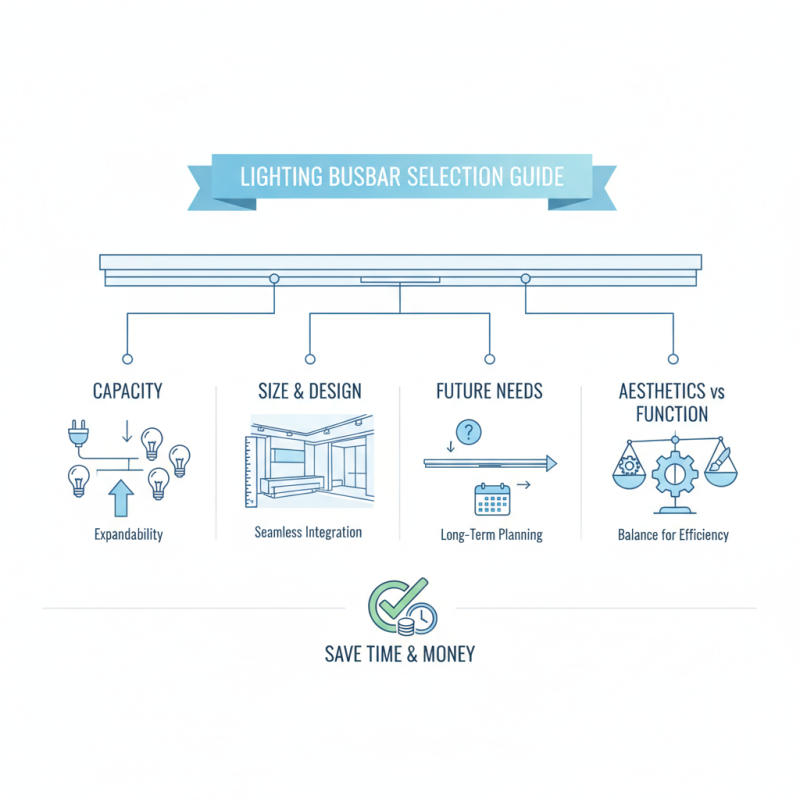
Many factors influence your choice, such as capacity, size, and design. A high-capacity Lighting Busbar can support multiple circuits. Meanwhile, the design must fit seamlessly into your environment. If it doesn't match, it can feel out of place.
Think about your needs carefully. Consider potential future expansions. A Lighting Busbar that is too small now may lead to problems later. Reflect on your usage patterns to make informed decisions. Balancing aesthetics with functionality is essential. Getting the right solution can save time and money in the long run.
Understanding the Basics of Lighting Busbars
Lighting busbars provide a versatile solution for distributing power in various settings. They consist of a series of conductive bars, encased in protective materials. Their primary function is to deliver electricity efficiently from a power source to lighting units. This efficiency makes them increasingly popular in commercial and industrial spaces. According to recent industry reports, market demand for lighting busbars is projected to grow by over 7% annually through 2028.
Selecting the right lighting busbar depends on understanding their specifications. Key factors include material, load capacity, and length. Copper and aluminum are the most common materials. Copper offers higher conductivity but is often more expensive. Aluminum, while less conductive, is lighter and more cost-effective. For larger installations, assessing the load capacity is crucial. Overloading can lead to overheating or failure, a concern highlighted in multiple safety studies.
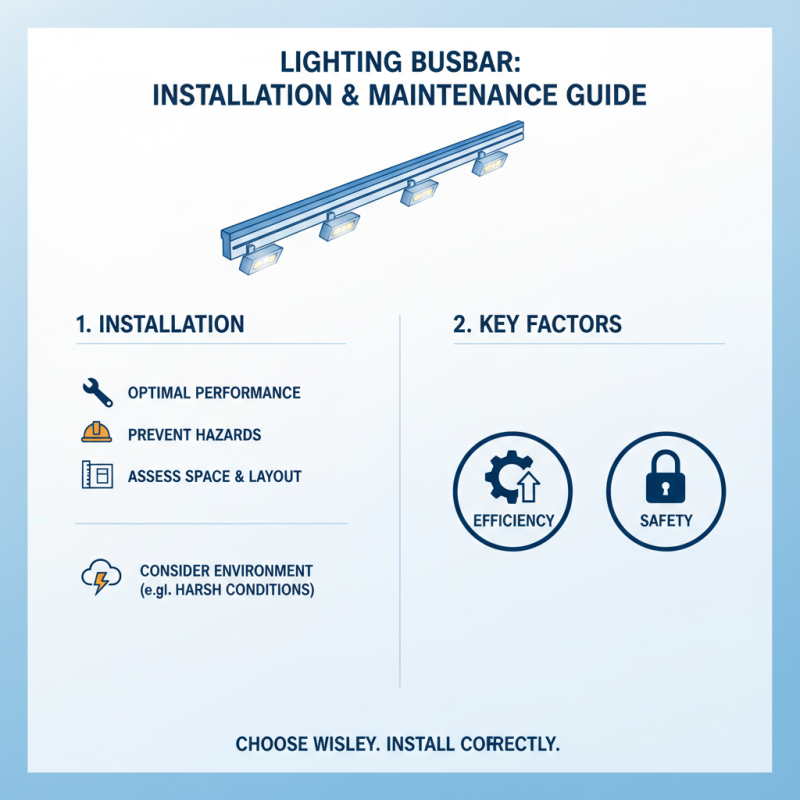
Many users struggle with proper installation and integration. Even minor miscalculations can result in inefficiencies. It's vital to consider the layout and future expansion. Inadequate planning often leads to limitations. Moreover, ongoing maintenance is essential for optimal performance. Regular inspections help avoid potential issues that can arise over time. Keeping these aspects in mind can ensure that you choose the right lighting busbar for your needs.
Lighting Busbar Load Capacity Comparison
Identifying Your Specific Lighting Requirements
Identifying your specific lighting requirements is crucial when selecting the right lighting busbar. Consider the size of your space. A small area may only need a few lights, while larger spaces require more lighting fixtures. Also, think about the purpose of the lighting. Is it for ambiance, work, or security? Each purpose demands different light intensity.
Take into account the type of light fixtures you plan to use. Different fixtures have unique power needs. For example, LED lights use less power than traditional bulbs. Make sure your busbar can support your chosen fixtures. Not everyone considers the long-term energy costs. Sometimes, a lower initial investment leads to higher electricity bills later.
Also, consider future needs. Will you expand your lighting setup? If so, choosing a busbar that can accommodate additional fixtures is wise. Reflect on flexibility as well. Can you easily rearrange or upgrade your setup? A proper lighting busbar should allow for these adjustments. While it's tempting to focus on aesthetics, functionality must come first.
How to Choose the Right Lighting Busbar for Your Needs?
| Criteria |
Description |
Recommended Options |
| Load Capacity |
Determine the total wattage that will be used. |
Up to 10A, 20A, 30A options depending on needs |
| Type of Lighting |
Consider the types of fixtures: LED, fluorescent, etc. |
LED busbars recommended for energy efficiency |
| Installation Environment |
Indoor or outdoor use dictates durability needs. |
Weather-resistant options for outdoor use |
| Length and Configuration |
Measure the space to be illuminated. |
Linear and modular configurations available |
| Dimming Options |
Consider if adjustable brightness is needed. |
Dimmable busbars for flexible lighting |
| Budget |
Establish a cost range for your lighting project. |
Affordable options between $50 - $200 |
Evaluating Different Types of Lighting Busbars
When choosing the right lighting busbar, it's vital to evaluate various types available. Each type offers distinct advantages and drawbacks. For instance, copper busbars are known for their conductivity. However, they can be heavy and more expensive. Aluminum busbars, on the other hand, are lighter and more cost-effective, but they might not provide the same level of performance.
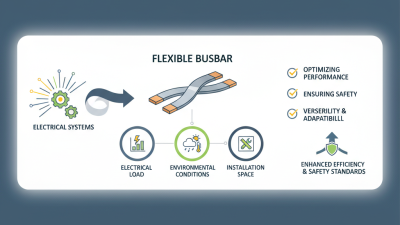
Consider the application environment. Is it an industrial setting or a more residential area? High humidity or temperature variations could impact busbar performance. Also, think about the installation space. Limited areas may restrict busbar size and shape. A flexible busbar design could be beneficial in tight spaces.
Finally, reflect on longevity and maintenance. Some busbars require more upkeep than others, which could affect long-term costs. Weight is crucial; heavier busbars may need additional support. Understanding these factors can help guide your choice, avoiding potential pitfalls.
Comparing Costs and Performance of Lighting Busbars
When choosing a lighting busbar, understanding costs is crucial. Lighting busbars come in various materials and configurations. The price can vary significantly based on these factors. Copper busbars often cost more than aluminum, but they provide better conductivity. This can lead to savings in energy costs over time.
Performance is another key consideration. A more expensive busbar may improve system efficiency. However, it’s worth noting that high performance doesn’t always justify the higher price. Sometimes, budget setups can perform adequately for average needs. Assess your specific requirements carefully before making a purchase.
Installation can also impact overall costs. A complex installation may lead to higher labor fees. DIY options might save money but require careful planning. Remember, a less expensive busbar may result in higher operational costs if it doesn’t suit your needs. It's essential to find a balance between initial investment and long-term savings.