Why Choose Copper Dense Busway for Your Power Distribution Needs?
In the realm of power distribution, the choice of infrastructure is crucial. Experts like Dr. Emily Hartman, a renowned authority in electrical engineering, emphasize the significance of selecting the right systems. She states, "Copper Dense Busway offers unmatched efficiency and reliability, crucial for modern energy demands."
Copper Dense Busway stands out among various distribution technologies. Its compact design allows for high power capacity within limited spaces. This adaptability is vital in urban environments where real estate is scarce. Additionally, the superior conductivity of copper minimizes energy loss, enhancing overall system performance.
Yet, there are challenges. Installation may require skilled professionals, and the upfront costs can be higher than alternatives. However, the long-term benefits often outweigh initial investments. As industries advance, Copper Dense Busway emerges as a key player, meeting the growing energy needs with efficiency and sustainability.

Benefits of Copper Density in Busway Systems for Power Distribution
Copper dense busway systems are gaining traction in power distribution due to their unique benefits. Their high conductivity ensures efficient energy transfer, significantly reducing power loss. A report by the Electrical Safety Foundation International indicates that copper's electrical conductivity is about 60% higher than aluminum, making it the preferred choice for critical applications. This efficiency translates to lower operational costs over time.
One major advantage of copper density is space-saving. Copper busways can carry more current in a smaller footprint compared to alternatives. This is particularly beneficial in congested installation environments. The National Electrical Manufacturers Association estimates that using copper can reduce the size needed for the busway infrastructure by up to 20%. This optimization maximizes available space and enhances system reliability.
**Tip:** Regular maintenance is essential for any busway system, especially in high-density applications. Inspect connections for wear and ensure proper heat dissipation.
Another point to consider is the initial investment. While copper systems can be costlier upfront, their longevity and lower maintenance needs often justify the expense. A 2022 report from the International Energy Agency noted that investments in copper systems yield higher returns in energy efficiency.
**Tip:** Evaluate total lifecycle costs rather than initial costs alone. This approach allows for informed decisions aligned with long-term budget plans.
Why Choose Copper Dense Busway for Your Power Distribution Needs?
| Dimension |
Value |
| Conductivity |
97% IACS |
| Weight |
8.96 g/cm³ |
| Corrosion Resistance |
Excellent |
| Thermal Conductivity |
401 W/m·K |
| Electrical Losses |
Low |
| Installation Flexibility |
High |
| Maintenance |
Low Cost |
Comparative Analysis: Copper Busway vs. Aluminum Busway Efficiency
When evaluating power distribution systems, copper and aluminum busways present unique advantages. Copper busways boast high conductivity, enhancing energy transfer efficiency. This translates to fewer energy losses during operation. Additionally, their compact size allows for space-saving installations, particularly important in dense urban environments.
Aluminum busways, while lighter and generally less expensive, may not provide the same level of performance. Their conductivity is lower, which can lead to higher resistance and more heat generation. Over time, this can escalate maintenance costs due to overheating issues. In contrast, copper is known for its durability and resistance to corrosion. This longevity can result in cost savings over the lifespan of the system.
However, the choice isn't as straightforward as it seems. Copper’s higher upfront cost can deter some projects. On the flip side, installation complexity can arise with aluminum. Each material has its pitfalls. Proper assessment of specific needs is crucial for informed decision-making.
Cost-Effectiveness of Copper Dense Busway Over Time and Installation
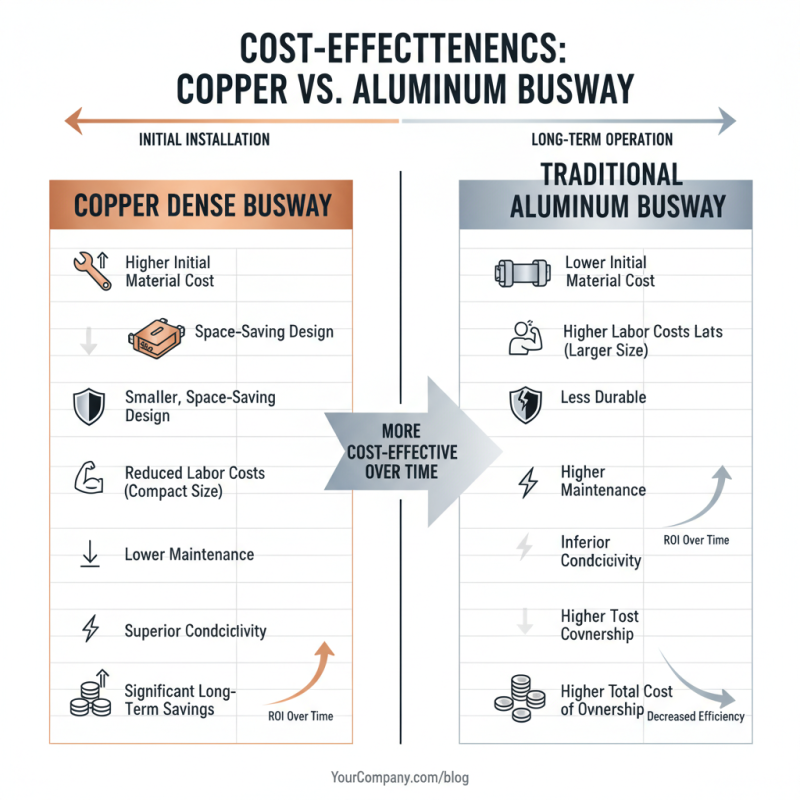
When considering power distribution solutions, the cost-effectiveness of copper dense busway is often highlighted. The installation costs may seem higher initially, but they provide long-term savings. The robust nature of copper ensures durability and reliability, reducing maintenance expenditures. Unlike aluminum, copper's conductivity allows for smaller installations, maximizing space efficiency. This translates to lower labor costs during setup.
Tips: Always assess the specific needs of your project. Consider future expansion plans when determining the system size.
A careful evaluation of energy efficiency is crucial. Copper dense busways maintain lower resistance, resulting in reduced energy losses. These savings accumulate over time, leading to significant operational cost reductions. While the upfront investment is notable, the ROI can outperform alternatives. This aspect is often overlooked; however, it leads to a more sustainable choice in power distribution.
Tips: Don't forget to factor in your long-term energy goals. Calculate the potential savings based on your energy usage patterns.
Impact of Copper Busway on Energy Loss and System Performance
Copper busways are gaining attention in the power distribution sector. Their structure effectively reduces energy loss. Copper has lower resistivity than aluminum. This means less heat is generated during operation. Consequently, systems run more efficiently.
The impact of energy loss in busway systems can be substantial. When resistance is low, efficiency goes up. This directly affects system performance. A strong, durable copper busway can carry higher loads without overheating. It contributes to a longer lifespan for electrical components. However, installation can be complex. Proper connections are crucial for optimal performance; any oversight can lead to inefficiencies.
Maintenance of copper busways is essential. Over time, connections may loosen, leading to increased resistance. Regular checks can prevent energy loss. Considering these factors is vital when selecting a power distribution solution. While copper offers many advantages, understanding potential pitfalls helps in making informed decisions.
Long-Term Reliability and Maintenance Advantages of Copper Busways
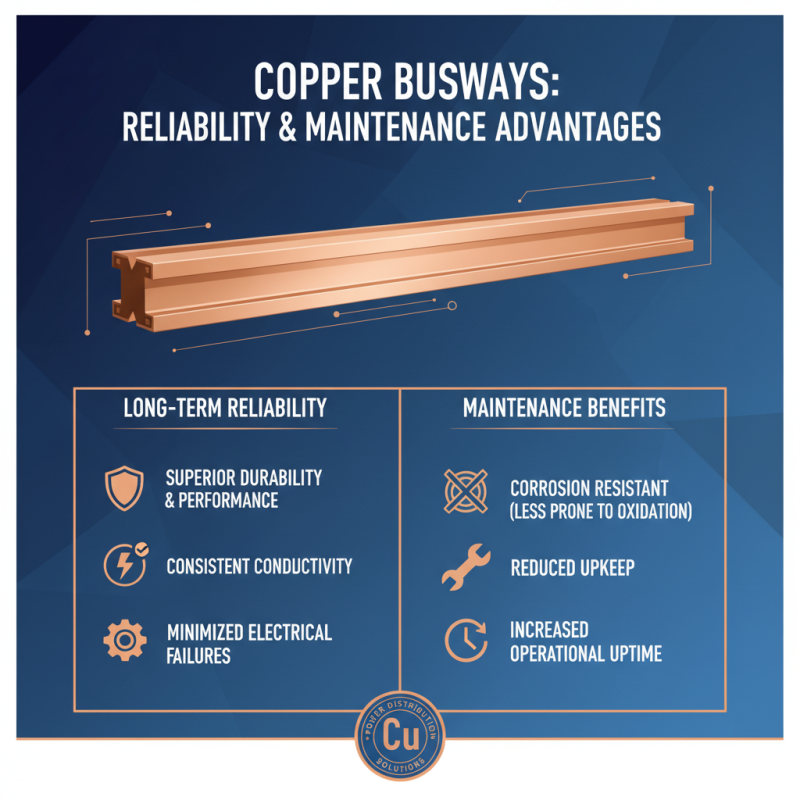
Copper busways provide essential benefits for power distribution. Their long-term reliability stands out in various industrial applications. The inherent attributes of copper enhance durability and performance. Over time, copper does not corrode as easily as alternatives, ensuring consistent conductivity. This feature minimizes the risk of electrical failures that can disrupt operations.
Maintenance is another critical consideration. Copper busways often require less frequent inspection and servicing. This saves both time and money in the long run. Technicians appreciate the straightforward installation processes, reducing labor costs and complexity. However, ensuring thorough initial installation is vital. Any oversight can lead to complications later on.
While copper offers these benefits, challenges exist. Initial costs may deter some. Evaluating total lifecycle expenses is crucial. The longevity of copper often offsets these upfront investments. Ultimately, making informed decisions is key for optimal power distribution.