Choosing the right busway system can shape a facility’s safety, efficiency, and future expansion costs. This guide examines seven of the best bus ducts in electrical systems for global buyers. It focuses on practical selection, not marketing claims.
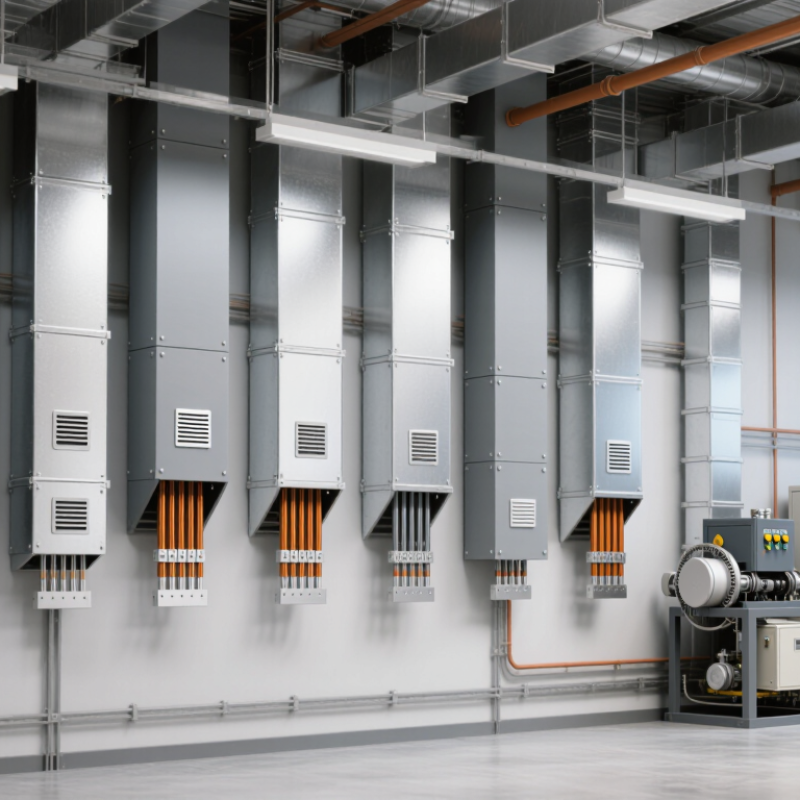
The term Bus Duct In Electrical refers to an enclosed conductor system that distributes power through copper or aluminum bars. In a factory, it may run above assembly lines, feeding machines through compact plug-in units. In a commercial tower, it can connect several floors without crowded cable trays. These details matter because installation space, load changes, and maintenance access differ greatly between projects.
The selected systems are compared through current capacity, voltage rating, conductor material, enclosure protection, heat management, and installation flexibility. Certification, testing records, and supplier support also deserve careful review. A low purchase price may become expensive when joints loosen, spare parts are unavailable, or local technicians lack training.
There is no universal winner.
Reliable choices usually balance safety, lifecycle value, and regional compliance. Buyers should verify short-circuit ratings, ingress protection, temperature limits, and compatibility with existing switchgear. Independent test reports can strengthen confidence, but documents should still be checked against the actual product configuration. Some recommendations may change when copper prices, project conditions, or national standards change. That is worth admitting.
This overview is designed for engineers, contractors, facility owners, and international procurement teams. It offers a practical starting point for comparing leading bus duct solutions before requesting technical drawings, samples, and quotations.
A bus duct, also called a busbar trunking system, is a compact pathway for distributing electrical power. It contains insulated copper or aluminum conductors inside a protective metal enclosure. Unlike separate cables, the conductors remain organized, supported, and accessible along a defined route.
Power enters through an incoming connection and flows along the busbars. Tap-off units can draw power at selected points for motors, panels, or production equipment. Joints connect each section, so joint pressure and insulation quality matter greatly. A loose joint can create heat, discoloration, and eventual failure. It sounds simple, but installation errors are common.
During equipment selection, engineers should check rated current, short-circuit withstand, voltage, temperature rise, enclosure protection, and installation space. Indoor systems may need different protection from dusty or wet environments. IEC 61439-6 can provide a useful reference, while local electrical codes still control the final design. Site inspections often reveal unexpected issues, such as poorly aligned sections or blocked access to tap-off boxes. These details deserve more attention than they usually receive. A bus duct should fit the building, load profile, maintenance plan, and future expansion needs, not just the purchase specification.
Modern power distribution uses several bus duct types, each suited to a different load pattern. Air-insulated bus duct leaves space around conductors for cooling and easier inspection. It works well in industrial plants, though dust and moisture demand regular maintenance. Sandwich bus duct places conductors closely inside a compact enclosure. This design saves space in commercial buildings and data centers.
Non-segregated phase bus duct keeps phase conductors in one shared housing. It offers a practical solution for medium-power distribution and shorter installation routes. Segregated phase bus duct separates phases with metallic barriers, improving fault containment and operational safety. Isolated phase bus duct gives each phase its own enclosure. Large generators and heavy industrial facilities often use it for high-current transmission.
Feeder bus duct carries power between main equipment and fixed loads. Plug-in bus duct adds tap-off points, allowing loads to connect along the route. Trolley bus duct supports movable equipment, such as cranes and workshop machinery. Selection should consider current rating, short-circuit strength, enclosure protection, ambient temperature, and installation height. Field measurements matter. A small routing error can create costly changes later. No type is perfect. Compact systems may simplify installation but leave less room for thermal expansion and inspection. Engineers should verify conductor materials, joint design, grounding continuity, and certification requirements before approval. Real projects often reveal one overlooked issue: access for future maintenance.
The chart compares typical continuous-current rating ranges commonly specified for bus duct systems in IEC-based electrical installations. Compact sandwich and air-insulated systems are widely used for high-capacity feeders, while plug-in, rising-main, trolley, and fire-resistant designs are selected for specific distribution, building, industrial, or safety requirements. Actual ratings depend on voltage, enclosure, installation method, ambient temperature, short-circuit withstand, and project standards.
Choosing among seven leading bus duct options can simplify power distribution across factories, towers, data centers, and transport facilities. Each design serves a different operating condition. Compact sandwich bus ducts reduce installation space and suit dense commercial floors. Air-insulated feeder ducts offer easier inspection and effective heat dissipation for long routes. Plug-in bus ducts support flexible load connections, with tap-off units placed near machinery or tenant areas.
Rising main bus ducts run vertically through high-rise buildings and reduce cable congestion between floors. Outdoor weather-resistant ducts protect conductors from rain, dust, and temperature changes. Fire-resistant bus ducts help maintain power continuity during tested fire conditions, but their ratings must match the project’s protection strategy. Flexible bus ducts can manage short alignment changes where rigid sections become difficult to install. Small details matter.
For global buyers, verify current IEC 61439-6 compliance, enclosure ratings, conductor material, short-circuit withstand, and temperature-rise test data. Confirm whether tap-off units include mechanical interlocks and suitable circuit protection. On a real project, a lower purchase price may become expensive after custom bends, lifting equipment, or delayed approvals. I have seen specifications fail because ambient temperature was treated as a footnote. It should be measured near the installation route. No option is perfect. Dust, moisture, seismic movement, maintenance access, and local inspection rules can change the best choice. Compare tested performance, documentation quality, delivery capability, and installer experience before approval.
Choosing the seven best bus ducts begins with the load, not the catalogue title. Common options include sandwich, air-insulated, feeder, plug-in, rising-main, high-current, and flexible systems. Each suits different operating conditions. The IEA Electricity 2024 report estimates data centres consumed about 415 TWh globally in 2024. That pressure makes short-circuit strength and heat control increasingly important.
Safety comparison should start with IEC 61439-6 verification, including temperature rise, dielectric strength, and short-circuit withstand. Ask for test certificates, IP ratings, conductor material, and joint protection. A higher ampere rating is not automatically safer. In practice, poorly torqued joints can create hot spots within weeks. Thermal scanning after energisation is useful, although it is often skipped.
Capacity calculations should include continuous load, diversity, harmonics, ambient temperature, and future expansion. Installation needs deserve equal attention. Plug-in systems can simplify tap-off changes, while rising-main systems reduce shaft congestion in tall buildings. Check bend radii, lifting access, fire stopping, neutral sizing, and maintenance clearance before ordering. NFPA 70 and local electrical codes may impose additional requirements. The shortcut is tempting. It can become expensive. A defensible selection records every assumption, even the uncertain ones.
Choosing among seven bus duct options—sandwich, air-insulated, feeder, plug-in, lighting, rising-main, and fire-rated—requires more than comparing ampere ratings. Global electricity demand is projected to grow by about 4% in both 2024 and 2025, according to the International Energy Agency’s Electricity 2024 report. That pressure makes compact distribution systems attractive, but local compliance remains decisive. Check IEC 61439-6, UL 857, or the required national equivalent. Verify temperature-rise tests, short-circuit withstand ratings, IP protection, conductor material, and installation altitude.
Cost reviews should include more than the purchase price. Copper and aluminum prices can change significantly, as tracked in the World Bank Commodity Markets Outlook. A cheaper enclosure may increase labor costs through difficult joints, custom supports, or delayed testing. Request a complete bill of materials, delivery schedule, factory acceptance test records, and spare-joint pricing. I have seen neat quotations hide unclear grounding arrangements. That deserves scrutiny.
Supplier reliability is equally practical. Review production capacity, inspection procedures, export experience, and traceable test certificates. Ask whether replacement joints, tap-off boxes, and gaskets are locally available. After-sales support should define response times, remote troubleshooting, commissioning assistance, and warranty exclusions. A strong supplier can provide bilingual drawings and installation training. Still, buyers should not trust promises alone. Audit the factory when project risk justifies the cost, and obtain references from installations with similar voltage, climate, and load conditions.
| Bus Duct Type | Typical Application | Typical Current Range | Main Technical Advantages | Key Limitations | Relevant Standards and Tests | Indicative Supply Cost | Supplier Selection Factors | After-Sales Requirements |
|---|---|---|---|---|---|---|---|---|
| Sandwich-Type Compact Busbar Trunking | Commercial buildings, factories, logistics centers, data centers, and main distribution routes. | 250–6,300 A; commonly available for low-voltage systems up to 1,000 V AC. | Compact dimensions, low impedance, good short-circuit performance, reduced voltage drop, and efficient use of installation space. | Requires accurate joint alignment and careful installation. Heat dissipation may be more dependent on enclosure design than in air-insulated systems. | IEC 61439-1 and IEC 61439-6; UL 857 where applicable; temperature-rise, dielectric, short-circuit, ingress-protection, and routine verification tests. | Approximately US$180–900 per meter, excluding fittings, tap-off units, transport, and installation. | Check conductor material, joint design, enclosure protection, certification scope, temperature-rise data, and global replacement-part availability. | Require installation supervision, joint torque guidance, infrared inspection recommendations, spare joint kits, and documented warranty procedures. |
| Air-Insulated Busbar Trunking | Industrial plants, utility rooms, large distribution systems, and projects requiring high current capacity. | 630–6,300 A; generally used in low-voltage applications up to 1,000 V AC. | Strong heat dissipation, flexible conductor configuration, straightforward visual inspection, and suitability for high-current applications. | Larger physical size, higher space requirements, and greater sensitivity to dust, moisture, and installation environment. | IEC 61439-1 and IEC 61439-6; applicable national electrical codes; enclosure, insulation, temperature-rise, and short-circuit verification. | Approximately US$150–750 per meter, with final pricing strongly affected by current rating and enclosure material. | Evaluate environmental sealing, support spacing, neutral and protective conductor sizing, corrosion protection, and factory testing. | Look for commissioning support, cleaning and inspection instructions, replacement insulators, and accessible technical documentation. |
| Non-Segregated Phase Bus Duct | Medium-voltage generator connections, transformer links, switchgear connections, and high-current industrial distribution. | 1,200–6,000 A; commonly applied from approximately 1 kV to 17.5 kV, depending on the design. | Cost-effective high-current connection, relatively simple construction, low conductor spacing requirements, and adaptable routing. | Phases share a common enclosure, so insulation coordination and fault-clearance design require careful engineering. | IEC 62271-200 or applicable medium-voltage switchgear requirements; IEC 61439-6 for low-voltage assemblies where applicable; dielectric and short-circuit tests. | Approximately US$400–1,800 per meter, excluding elbows, expansion joints, and field-engineering services. | Confirm voltage class, fault-current withstand, enclosure grounding, thermal expansion provisions, seismic requirements, and interface drawings. | Require site acceptance testing, expansion-joint inspection procedures, insulating-part replacement guidance, and emergency engineering support. |
| Segregated Phase Bus Duct | Power stations, large generators, transformers, utility substations, and high-capacity medium-voltage systems. | 2,000–12,000 A; often designed for medium-voltage generator and transformer circuits. | Individual phase enclosures improve electromagnetic separation, reduce phase-to-phase fault risk, and support high short-circuit withstand levels. | Higher purchase cost, larger footprint, more complex joints, and increased transport and installation requirements. | IEC 62271 series or relevant national standards; short-circuit, dielectric, temperature-rise, enclosure, and mechanical-strength tests. | Approximately US$900–3,500 per meter, depending on voltage, current, enclosure construction, and accessories. | Prioritize verified short-circuit ratings, phase enclosure sealing, expansion design, grounding continuity, lifting points, and project references. | Require factory acceptance testing, field joint supervision, commissioning support, spare insulators, and long-term technical service availability. |
| Feeder Busway | Long-distance power distribution between transformers, main switchboards, motor control centers, and production areas. | 600–5,000 A; available in low-voltage configurations and selected higher-voltage applications. | Efficient continuous power transfer, predictable voltage drop, low maintenance compared with multi-cable routes, and clean installation layout. | Route changes after manufacturing are difficult. Engineering accuracy is essential for length, bends, supports, and connection points. | IEC 61439-6 for low-voltage busbar trunking; UL 857 where required; current, voltage-drop, temperature-rise, ingress-protection, and short-circuit tests. | Approximately US$140–700 per meter, excluding tap-off boxes, end feeds, elbows, and support systems. | Compare total installed cost rather than meter price, including accessories, customs duties, installation tools, and local compliance testing. | Request route verification, installation drawings, spare hardware, torque specifications, and post-commissioning thermal scanning guidance. |
| Plug-In Busway | Factories, workshops, warehouses, retail facilities, and buildings with frequently changing load locations. | 100–1,600 A; tap-off ratings commonly range from 16 A to 630 A, depending on design. | Flexible load expansion, convenient tap-off locations, reduced cable congestion, and faster connection of new equipment. | Tap-off units increase system cost. Unused openings require proper protection, and installation must prevent unauthorized access. | IEC 61439-6; UL 857 where applicable; tests for mechanical interlocking, temperature rise, dielectric strength, ingress protection, and short-circuit withstand. | Approximately US$180–850 per meter; plug-in boxes may cost an additional US$100–1,500 each. | Check tap-off compatibility, mechanical and electrical interlocks, touch protection, availability of replacement units, and load-balancing options. | Require spare tap-off covers, periodic inspection instructions, clear labeling procedures, and technical support for load additions. |
| Rising Busbar Trunking | High-rise residential buildings, hotels, hospitals, offices, and vertical power distribution systems. | 250–6,300 A; commonly designed for low-voltage vertical distribution up to 1,000 V AC. | Efficient use of vertical shafts, reduced cable weight, standardized floor connections, and easier metering or tenant supply arrangements. | Requires precise shaft coordination, fire-stopping, vertical support design, and allowance for building movement and thermal expansion. | IEC 61439-1 and IEC 61439-6; local fire and building codes; ingress-protection, temperature-rise, dielectric, short-circuit, and fire-sealing evaluations where required. | Approximately US$220–1,000 per meter, excluding floor tap-off units, fire barriers, supports, and installation. | Verify vertical alignment tolerances, fire-compartment details, seismic performance, tap-off accessibility, metering integration, and local authority acceptance. | Require floor-by-floor inspection records, fire-seal maintenance guidance, spare joint components, and rapid response for tenant supply faults. |